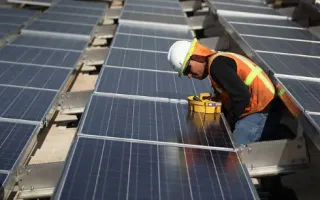
Installing solar panels can reduce electricity costs and provide long-term energy savings, but the upfront price can make the decision difficult for homeowners.
A residential solar system can require a substantial investment, particularly when homeowners add battery storage, electrical upgrades, or roof work to the project.
Fortunately, homeowners do not necessarily need to pay the entire solar installation cost upfront.
In 2026, the most common ways to pay for residential solar include cash purchases, solar loans, solar leases, and power purchase agreements (PPAs). Each option has a different effect on ownership, monthly payments, total cost, savings, and long-term flexibility.
Understanding these differences before signing a solar contract can help homeowners avoid expensive financing mistakes.
What Are the Main Solar Financing Options?
The four primary approaches can be summarized as follows:
| Financing Method | Own the System? | Upfront Cost | Monthly Payment | Long-Term Ownership |
|---|---|---|---|---|
| Cash purchase | Yes | High | None | Yes |
| Solar loan | Yes | Low–Moderate | Yes | Yes |
| Solar lease | Usually no | Low | Yes | Usually no |
| PPA | Usually no | Very low | Based on energy used | Usually no |
The best option depends on the homeowner's available cash, credit profile, expected time in the property, electricity prices, and preference for ownership.
Paying Cash for Solar Panels
A cash purchase is the simplest financing method.
The homeowner pays the installation company for the system and becomes the owner.
For example:
Solar installation: $18,000
Upfront payment: $18,000
Loan interest: $0
The biggest advantage is that there are no solar loan interest charges.
Advantages of Paying Cash
Cash financing can provide:
- No loan interest
- No monthly solar loan payment
- Full system ownership
- Potentially higher lifetime savings
- Greater control over the system
- Simpler financial structure
Once the system is installed, the homeowner can potentially benefit from lower electricity costs without having a separate solar financing payment.
Disadvantages of Paying Cash
The main disadvantage is the large initial investment.
Putting $18,000 into solar may not be appropriate for a homeowner who needs that money for:
- Emergency savings
- Mortgage payments
- Home repairs
- Business investment
- Other high-priority expenses
A homeowner should not drain their emergency fund simply to avoid solar loan interest.
Solar Loans in 2026
Solar loans allow homeowners to finance the installation while retaining ownership of the system.
Instead of paying $18,000 immediately, a homeowner could finance some or all of the project.
For example:
Solar system: $18,000
Down payment: $3,000
Financed amount: $15,000
The homeowner then makes monthly payments according to the loan agreement.
How Solar Loan Interest Affects Total Cost
The interest rate can significantly change the economics.
Consider this simplified example:
| Loan Amount | Term | Illustrative APR | Approx. Monthly Payment* |
| $15,000 | 5 years | 7% | $297 |
| $15,000 | 10 years | 7% | $174 |
| $15,000 | 15 years | 7% | $135 |
| $15,000 | 20 years | 7% | $116 |
*Illustrative principal-and-interest estimates only. Actual loan offers vary.
A longer loan term reduces the monthly payment but can substantially increase total interest paid.
What to Check Before Taking a Solar Loan
Homeowners should compare:
- APR
- Loan duration
- Monthly payment
- Total repayment
- Origination fees
- Dealer fees
- Prepayment penalties
- Variable versus fixed interest
- Collateral requirements
The cheapest-looking monthly payment is not necessarily the cheapest financing option.
Solar Leases Explained
With a solar lease, a third-party company generally owns the solar system.
The homeowner pays the provider a fixed monthly amount for the use of the system.
For example:
Lease payment: $150/month
Annual lease cost: $1,800
The homeowner may benefit from lower electricity purchases, but the solar provider retains ownership of the equipment.
Advantages of Solar Leasing
A lease can offer:
- Low upfront cost
- Predictable payments
- Professional system maintenance
- No need to purchase the equipment outright
- Potentially simpler installation management
For homeowners who prioritize low upfront expenses, this structure can be attractive.
Disadvantages of Solar Leasing
The major drawback is that the homeowner generally does not own the solar system.
Other considerations can include:
- Long contract terms
- Escalator clauses
- Transfer requirements when selling the property
- Lower long-term financial benefits
- Restrictions related to system ownership
- Contract termination conditions
Before signing, homeowners should understand what happens if they sell the house before the lease ends.
What Is a Solar Power Purchase Agreement?
A Power Purchase Agreement, commonly called a PPA, is different from a traditional solar lease.
Under a PPA, a solar company typically owns and maintains the system while the homeowner pays for the electricity produced by the system at an agreed rate.
For example:
PPA electricity rate: $0.15/kWh
Annual solar production: 8,000 kWh
Estimated annual PPA payment:
8,000 × $0.15 = $1,200
The homeowner may then compare this amount with what electricity would have cost from the traditional utility.
Solar Lease vs. PPA
The two models are often confused.
| Feature | Solar Lease | Solar PPA |
| System owner | Provider | Provider |
| Payment structure | Fixed or scheduled payment | Per kWh produced |
| Homeowner owns equipment | Usually no | Usually no |
| Maintenance | Usually provider | Usually provider |
| Energy production affects payment | Usually no | Yes |
| Long-term contract | Common | Common |
A PPA can provide lower-cost solar electricity without requiring the homeowner to purchase the equipment, but the contract terms must be carefully evaluated.
Solar Financing Cost Example
Suppose a homeowner has three options for a $20,000 solar installation.
Option A: Cash
Upfront: $20,000
Financing interest: $0
If annual net savings are $2,200:
$20,000 ÷ $2,200 = 9.1 years
The simplified payback period is approximately 9.1 years.
Option B: Solar Loan
Suppose the homeowner finances the full $20,000 and eventually repays:
$26,000
If the system produces $2,200 of annual net savings:
$26,000 ÷ $2,200 = 11.8 years
The financing cost has increased the effective investment.
Option C: Solar Lease
Suppose the homeowner pays:
$150/month
Annual lease payments:
$150 × 12 = $1,800
If the homeowner's solar-related electricity savings are $2,200 per year, the simplified difference is:
$2,200 − $1,800 = $400
However, this is not directly comparable to the cash purchase because the homeowner does not own the system.
The actual economic comparison requires analyzing the complete contract, electricity savings, escalators, and future obligations.
Which Solar Financing Option Is Cheapest?
There is no universal winner.
In many cases, a cash purchase can produce the lowest total acquisition cost because it avoids financing interest.
A solar loan can provide a balance between ownership and lower upfront costs.
A lease or PPA can reduce the need for upfront capital but may provide less ownership-related financial upside.
The correct comparison should be based on total cost over the expected ownership period, not simply the monthly payment.
Solar Financing and Home Resale
Homeowners who may sell their property within several years should pay special attention to financing contracts.
A cash-owned solar system is generally straightforward because the homeowner owns the equipment.
A financed system may require the loan to be paid off or transferred according to the lender's rules.
A lease or PPA can be more complicated because the buyer may need to assume the existing contract or the seller may need to resolve the agreement before closing.
Before signing a long-term contract, ask:
"What happens to this agreement if I sell my house?"
The answer should be clearly documented in the contract.
Solar Financing Options in the United States
US homeowners have access to multiple solar financing structures, including cash purchases, loans, leases, and PPAs, depending on state regulations and installer availability.
The federal residential solar tax-credit landscape also changed for 2026. Homeowners should not assume the former 30% Residential Clean Energy Credit applies to new expenditures because the federal credit under Section 25D does not apply to expenditures after December 31, 2025.
State and utility incentives can differ substantially, so homeowners should evaluate their specific location.
California
Compare financing with utility compensation rules and battery economics. A financing structure that looks attractive on paper may perform differently depending on the property's electricity rate and export arrangement.
Texas
Review electricity plans and solar export compensation carefully. Different utility territories can produce significantly different solar economics.
Florida
Consider roof condition and insurance before financing a long-term solar system. Installing solar on a roof that needs replacement can create additional costs.
New York
Compare available state and utility incentives before calculating the amount that needs to be financed.
Solar Financing Options in the United Kingdom
UK homeowners can evaluate solar using cash savings, personal finance, specialized financing, or other payment arrangements offered by installers.
The financial calculation should include:
- Installation cost
- Financing interest
- Electricity savings
- Export income
- Battery cost
- Maintenance
The Smart Export Guarantee framework can provide eligible generators with payments for exported electricity through participating suppliers.
Because export tariffs vary, homeowners should avoid assuming that every exported kilowatt-hour has the same financial value as electricity consumed directly in the home.
Solar Financing Options in Canada
Canadian solar financing depends heavily on provincial and local programs.
Homeowners should compare:
- Solar loans
- Home improvement financing
- Provincial incentives
- Utility programs
- Cash purchases
- Installer financing
The availability and value of incentives can change over time, so financing calculations should use current program information.
A homeowner should also compare the loan's effective cost against expected annual electricity savings.
Solar Financing Options in the Netherlands
The Netherlands requires careful consideration of future electricity-export economics.
The salderingsregeling is scheduled to end on January 1, 2027, meaning homeowners need to think about how much solar electricity they consume directly rather than assuming exported electricity will have the same value as electricity purchased from the grid.
For a financed system, the homeowner should model savings under both:
2026 electricity economics
and
post-2027 self-consumption and export economics.
This can prevent an overly optimistic long-term ROI calculation.
Solar Financing Options in Australia
Australian homeowners can consider cash, loans, and solar-plus-battery financing structures.
The federal Cheaper Home Batteries Program provides eligible households and small businesses with a discount of around 30% on the upfront cost of eligible small-scale battery systems, subject to program requirements.
For households considering financing a battery, the most important calculation is the additional annual savings generated by storage compared with the additional financing cost.
How to Choose the Right Solar Financing Option
Choose Cash If You Want Maximum Ownership
Cash can make sense if:
- You have sufficient savings
- You want to avoid interest
- You plan to stay in the property
- You prioritize long-term savings
But maintain an appropriate emergency reserve after making the purchase.
Choose a Solar Loan If You Want Ownership Without a Large Upfront Payment
A loan may be suitable if you want to own the equipment but prefer to spread the cost over several years.
Focus on the total repayment rather than just the monthly payment.
Consider a Lease If Low Upfront Cost Is the Priority
A lease may be attractive if minimizing initial expenditure is more important than owning the equipment.
Read the contract carefully, especially the payment structure and home-sale provisions.
Consider a PPA If You Prefer Paying for Solar Energy Produced
A PPA can work for homeowners who want solar electricity without purchasing the system.
However, compare the contracted electricity rate with expected utility rates and review any annual rate increases.
Tips for Getting Better Solar Financing Terms
Get multiple financing offers. Do not automatically accept the financing offered by the installer.
Compare APR rather than advertised interest alone. Fees can materially increase the actual cost.
Calculate total repayment. A low monthly payment can hide a long and expensive loan.
Read escalation clauses. This is particularly important for leases and PPAs.
Ask about early repayment. Determine whether paying off the financing early creates penalties or additional charges.
Separate solar and battery economics. A battery may have a different return profile from the solar panels.
Check what happens when you sell. Long-term contracts can affect a future property transaction.
Do not finance unnecessary upgrades. Every additional dollar borrowed increases the amount that must eventually be recovered through energy savings.
FAQ
What is the best way to finance solar panels?
There is no single best option. Cash can minimize financing costs, while a solar loan provides ownership with lower upfront capital requirements. Leases and PPAs can reduce upfront costs but generally involve third-party ownership.
Is paying cash for solar better than taking a loan?
Cash can produce greater lifetime savings because there is no loan interest. However, homeowners should avoid using money needed for emergencies or essential financial obligations.
Are solar loans worth it?
A solar loan can make sense when the financing cost is reasonable and expected electricity savings justify the investment. Compare the total loan repayment with the expected lifetime savings.
What is the difference between a solar lease and PPA?
A lease generally charges a scheduled payment for use of the system, while a PPA typically charges the homeowner based on the amount of electricity the system produces.
Can I sell my house with financed solar panels?
Usually, yes, but the process depends on the financing agreement. The loan may need to be paid off, transferred, or otherwise handled during the property sale.
Does solar financing affect ROI?
Yes. Interest, financing fees, and loan terms can increase the effective cost of the solar investment and therefore change the payback period.
Is a 20-year solar loan too long?
Not necessarily, but a longer loan can increase total interest costs. Homeowners should compare the total repayment with shorter financing options before choosing the term.
Should I finance solar panels and a battery together?
It depends on the economics of each component. Calculate the expected additional savings from the battery separately before adding its cost to the financing package.
Conclusion
Choosing how to pay for solar panels can be just as important as choosing the solar equipment itself.
A cash purchase can minimize financing costs and maximize ownership.
A solar loan can spread the investment over time while allowing the homeowner to own the system.
A solar lease can reduce upfront expenses but generally leaves ownership with the provider.
A PPA allows homeowners to purchase solar electricity without directly purchasing the equipment.
The right choice depends on your financial position, expected time in the property, electricity costs, available incentives, financing terms, and long-term energy goals.
Most importantly, don't compare solar financing options based only on the monthly payment.
Compare:
Upfront cost + financing cost + energy savings + ownership + contract obligations
over the period you expect to own the home.
Before signing a solar agreement, request multiple quotes, compare financing terms, calculate total repayment, and determine how each option affects your expected solar payback period. A few hours of financial comparison can prevent years of unnecessary costs.